

Since Obama took office, U.S. foreign assistance has been going through some historic changes. A renewed appreciation for the role that development plays in U.S. foreign affairs and a rebuilding of its ranks; the gradual integration of development budget, activities, and goals into U.S. defense and diplomatic strategies (and vice-versa in some cases, the “three D’s”); elevating USAID as the lead in U.S. foreign assistance while at the same time reforming it to be a smarter, more efficient, results-based agency.
The Quadrenniel Diplomacy and Develop Review, inagurated last Thursday encapsulates these changes in a policy that is sure to be a watershed document in U.S. foreign policy history.
Read it here: http://www.state.gov/s/dmr/qddr/
Wednesday, December 22, 2010
Friday, December 3, 2010
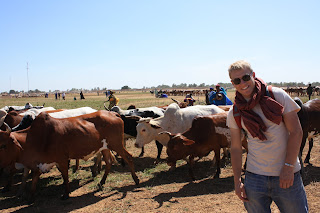
Cattle Crossing the Niger River at Diafarabe, Mali

Livestock plays a central role in the Malian economy and livelihoods. It's Mali's 3rd largest export, and 80% of Malians derive some portion of their income from the raising of either of cattle or small ruminants (goat, sheep). For Mali’s nomadic Fulani people, cattle constitute more than just an asset or means of income, but is the centerpiece to their culture. Herding is not just agriculture production and trade, but paces out the seasons and sets the rhythm of daily life. In Mali, one marker of the beginning of the dry season is the herding of cattle from their domicile grazing grounds in the North in search of greener pastures south of the Niger River. Tradition has it that every year the first of these Niger River crossings takes place at Diefarabe.
This year I took a weekend trip to watch this year’s inaugural crossing, an event which seems to usually draw a decent crowd of Fulani herders and family members, Bozo fisherman/ferry-operators, Barriba villagers, local government leaders, and a handful of tourists. Here are some shots from the day.




Monday, November 15, 2010
An Afternoon in the Studio of Malick Sidibé
After some stateside R&R, I am Back in Bamako. I’ve actually been so for about two months, and during this time have had no shortage of activities and thoughts to write about; rather, the bustle of Bamako has made it hard to find a time and calm mind to sit down and think. Notwithstanding, a couple weeks ago I had an opportunity that I can’t pass up blogging about.
Malick Sidibé is probably one of Mali’s most celebrated artists, and surely its most famous photographer. Strictly speaking one would classify Sidibé’s photography as studio and candid portraits, but his work is so refreshingly different from what Africans consider portrait photography, and from Western conceptions about African art and artistic expression. Since the 1960s Malick has made his mark with his ability to intuit and capture the emotions and self-expression of Malians, whether they be on a studio stage or at party, in prepared pose or candid dance. Independence and freedom; energy and movement; cultural tension; self-expression and imagination; joy and affection; authentic portrayal. Such are the motifs that run through Malick’s photographs.
 Above: One of Sidibe's most recognizable "on the scene" shots
Below: One characteristic of his Sidibé’s studio work is his tendency to “play” with the expectations of his viewers by capturing more than what should typically be in a studio shot. Often the backdrop will end to expose a bare wall; the platform stops at the bottom of the image and you see the cement floor; often the gazes and attention of the subjects are very obviously fixed on something outside the frame. All this as a gesture to authenticity, and as if to say that you that you can’t put people—above all Malians—in a box.

A couple weeks ago I and some friends were able to get an appointment to have some studio shots taken by Sidibé. Although today Malick is over seventy years old, he still keeps a studio in Bamako: surprisingly inconspicuous and unapologetically “Malian” in appearance and everything else. After waiting a couple hours beyond our rendez-vous time, the vieux Sidibé finally showed up, cane in hand, dressed dapperly in crisp Malian Bazin, wearing the smirk of a playful artist.


Above: Malick in action.
Our photo shoot lasted only about 20 minutes. Although all of us had given some thought as to how we wanted to memorialize ourselves before Sidibé’s camera, once Malick entered his studio he took a natural but unimposing command of his space and subjects, and suggested unique poses for each of his three visiters. How he came up with each is beyond me, but for the man whose work and expertise is so aptly captured by the bambara phrase “i ka nje tan” (“you look good like that”), who would argue?
 Above: No, it's not cheesy, nor is it Glamour-shots. Simply sidibe-esque.
Below: Our shots. While waiting for the Sidibé’s arrival, we took advantage of the time and laid back atmosphere of Chez Malik to practice our poses.


Wednesday, September 8, 2010
Alarming News in America
I cringe a bit to see that it's been over 6 months since I've blogged. I'm stateside at the moment, and there have been some related stories about American-Islam relation that are riling me up enough re-emerge.
Most have probably been following the U.S. news stories about the controversy over the Ground Zero Islamic center; the burned-down Islamic center site in Murfreesboro, TN (the Feds suspect arson); and now this extremist pastor in FL who is leading his congregation in an "International Koran Burning Day" this Saturday, Sept 11.
To the international debate that these events are sparking, I want to add the perspective of an American Christian who has been living abroad in majority Muslim areas for the last three years. In my opinion, this trend of paranoia, intolerance, and violence that is developing in America towards Muslims living here is scary, sad, and truly embarrassing.
This is scary because these events will no doubt trigger equally extreme repercussions in some Muslim countries, perhaps even worst responses, centered against U.S. troops, and other Americans and Christians working and living abroad. This is a very real risk that a few insecure people ocassioning for an entire nation.
This is sad, because I have much empathy for the minority Muslims that are in the States--many of whom have come from poor or unstable countries on the assumption that America is a nation which promises tolerance, religious freedom, and open opportunity to all, and who are instead being marginalized anew by some new form of social tyranny. I personally know many Muslims from Africa who have come to the U.S. to work or study. Both their places of worship and their sacred texts (in fact, "sacred text" does not convey all the meaning and importance that the Koran holds for a a Muslim) are being publicly targeted for destruction, and at the apex of Ramadan, one of Islam's most important religious holidays. That Christians and Americans are also targeted in other parts of the world--while true, sad, and unjustified--is beside the point here. Responding in kind, in fact, will only aggravate this violence.
Finally, this is embarrassing--because a small number of Americans are bringing disrepute to an entire nation, and so-called Christians are horribly misrepresenting the Christ-like love on which the our faith is centered. With this last comment, my frustration is brought back most ardently on this FL pastor Terry Jones. I hope that he is stopped, repents, and finds--maybe for the first time--the true Christian faith.
Most have probably been following the U.S. news stories about the controversy over the Ground Zero Islamic center; the burned-down Islamic center site in Murfreesboro, TN (the Feds suspect arson); and now this extremist pastor in FL who is leading his congregation in an "International Koran Burning Day" this Saturday, Sept 11.
To the international debate that these events are sparking, I want to add the perspective of an American Christian who has been living abroad in majority Muslim areas for the last three years. In my opinion, this trend of paranoia, intolerance, and violence that is developing in America towards Muslims living here is scary, sad, and truly embarrassing.
This is scary because these events will no doubt trigger equally extreme repercussions in some Muslim countries, perhaps even worst responses, centered against U.S. troops, and other Americans and Christians working and living abroad. This is a very real risk that a few insecure people ocassioning for an entire nation.
This is sad, because I have much empathy for the minority Muslims that are in the States--many of whom have come from poor or unstable countries on the assumption that America is a nation which promises tolerance, religious freedom, and open opportunity to all, and who are instead being marginalized anew by some new form of social tyranny. I personally know many Muslims from Africa who have come to the U.S. to work or study. Both their places of worship and their sacred texts (in fact, "sacred text" does not convey all the meaning and importance that the Koran holds for a a Muslim) are being publicly targeted for destruction, and at the apex of Ramadan, one of Islam's most important religious holidays. That Christians and Americans are also targeted in other parts of the world--while true, sad, and unjustified--is beside the point here. Responding in kind, in fact, will only aggravate this violence.
Finally, this is embarrassing--because a small number of Americans are bringing disrepute to an entire nation, and so-called Christians are horribly misrepresenting the Christ-like love on which the our faith is centered. With this last comment, my frustration is brought back most ardently on this FL pastor Terry Jones. I hope that he is stopped, repents, and finds--maybe for the first time--the true Christian faith.
Monday, March 1, 2010
What Finance & Law Have to Say About Economic Development
I just finished reading two books which are very helpful about thinking about the "development problem" in a new light: The Mystery of Capital, by Peruvian economist Hernando DeSoto (http://ild.org.pe/), and Dead Aid by Zambian economist Damibas Moyo (http://www.dambisamoyo.com/). More important than the fact that these books are written by someone other than your stock western development economist (no ad hominen argument commited here), these thinkers write from novel perspectives (financing and law) which give us refreshing, market-oriented approaches to economic development.
Ultimately the problem with economic development is not its goals or activities, but the way its financed. Aid money-- particularly government-to-government transactions-- isn't just ineffective to achieve development goals, but is positively harmful, says Moyo. Aid encourages corruption, hampers good citizenry and government accountability, and can be economically harmful to an economy (as it tends to reduce savings and investment, encourages inflation, and chokes off the export sector, among other things).
Moyo proposes a "menu" of financing options to replace aid and enable states raise their own funds for development. The participation in international bond markets and the development of local ones. More Foreign Direct Investment (FDI) in infrastructure and institutions from companies and governments (like China) who see opportunities in Africa. More trade, which brings a country foreign earnings, and makes an economy more productive. Better banking services for the poor should expand micro-financing opportunities, lower the costs of remitances and other money transfer services, and enable the poor to more easily turn their assets into usable savings.
DeSoto's book--again, written from the same market-driven development perspective--is all about this last point: turning the poor's assets into capital. While Moyo writes from a broad finance perspective (among other things she spent 8 years as a strategist with Goldman Sachs), DeSoto focuses on the legal reform that is necessary to enable the poor to begin leveraging their savings and fund their own development.
The problem is that many developing countries have property legal systems that do not reflect the informal or extralegal sector, which often is the world in which most of the population lives and works. The consequence is not only that these extralegal property owners can't physically secure their assets, but that they also can't leverage these assets as capital to improve and develop their livelihoods. Consider, for example, how important mortgages are as a loan source for many Americans, or the important role that a residential address plays in allowing someone to access credit or making them "accountable" enought to enact a business transaction.
The solution, says DeSoto, is hidden in the histories of many western nations, all of which at some point in had to begin recognizing and absorbing the extralegal sector into their formal legal system. This happens by reform, which requires the vision and initiation of political leaders.
Ultimately the problem with economic development is not its goals or activities, but the way its financed. Aid money-- particularly government-to-government transactions-- isn't just ineffective to achieve development goals, but is positively harmful, says Moyo. Aid encourages corruption, hampers good citizenry and government accountability, and can be economically harmful to an economy (as it tends to reduce savings and investment, encourages inflation, and chokes off the export sector, among other things).
Moyo proposes a "menu" of financing options to replace aid and enable states raise their own funds for development. The participation in international bond markets and the development of local ones. More Foreign Direct Investment (FDI) in infrastructure and institutions from companies and governments (like China) who see opportunities in Africa. More trade, which brings a country foreign earnings, and makes an economy more productive. Better banking services for the poor should expand micro-financing opportunities, lower the costs of remitances and other money transfer services, and enable the poor to more easily turn their assets into usable savings.
DeSoto's book--again, written from the same market-driven development perspective--is all about this last point: turning the poor's assets into capital. While Moyo writes from a broad finance perspective (among other things she spent 8 years as a strategist with Goldman Sachs), DeSoto focuses on the legal reform that is necessary to enable the poor to begin leveraging their savings and fund their own development.
The problem is that many developing countries have property legal systems that do not reflect the informal or extralegal sector, which often is the world in which most of the population lives and works. The consequence is not only that these extralegal property owners can't physically secure their assets, but that they also can't leverage these assets as capital to improve and develop their livelihoods. Consider, for example, how important mortgages are as a loan source for many Americans, or the important role that a residential address plays in allowing someone to access credit or making them "accountable" enought to enact a business transaction.
The solution, says DeSoto, is hidden in the histories of many western nations, all of which at some point in had to begin recognizing and absorbing the extralegal sector into their formal legal system. This happens by reform, which requires the vision and initiation of political leaders.
Tuesday, February 23, 2010
Recent Ramblings
This month I had the opportunity to meet up with some PC volunteers from Benin to do some traveling in Mali and Senegal. Here are some snapshots and highlights.
Segou Music Festival
This year the Malian town of Segou held it's 6th annual Festival Sur le Niger, which is probably the single most important event for showcasing Mali's rich music culture and world-class artists. The festival took place over almost an entire week, each day ending with a headlining concert whose stage was actually a float on the Niger river. (For those of you from Chatty, it kind of reminded me of Riverbend.)
Dakar, Senegal
After Segou and a short sejour in Bamako we headed to Senegal. It's capital, Dakar, blew me away with its urban development, tall builings, cliffside seascapes, and great restaurants. Dakar has an interesting culture all its own: worldly and sophisticated residents, an African language (Woloff) quite unlike others I've heard before, lively sub-cultures, and the capital West Africa's longest-standing democracy (modern Senegal has never seen a coup d'etat), to point out a few facets of this city.


Toubab Dialo, Senegal
Segou Music Festival
This year the Malian town of Segou held it's 6th annual Festival Sur le Niger, which is probably the single most important event for showcasing Mali's rich music culture and world-class artists. The festival took place over almost an entire week, each day ending with a headlining concert whose stage was actually a float on the Niger river. (For those of you from Chatty, it kind of reminded me of Riverbend.)
Dakar, Senegal
After Segou and a short sejour in Bamako we headed to Senegal. It's capital, Dakar, blew me away with its urban development, tall builings, cliffside seascapes, and great restaurants. Dakar has an interesting culture all its own: worldly and sophisticated residents, an African language (Woloff) quite unlike others I've heard before, lively sub-cultures, and the capital West Africa's longest-standing democracy (modern Senegal has never seen a coup d'etat), to point out a few facets of this city.

Goree Island, Senegal
Goree Island is just off Dakar, and was one of the main slave ports in the 17th and 18th centuries. Today the island is filled with Malian artisans, museums, and winding paths that take you past old colonial buildings, baobab trees, and friendly residents.
Saint Louis, Senegal
Saint Louis is all the way up the Senegal coastline, just shy of the Mauratanian border. Historically it was the French administrative center for all of Francophone West Africa, and the island part of the town contains block after block of interesting architecture.

Toubab Dialo, Senegal
Senegal has some nice beaches--somehow much more picturesque and swimmer-friendly than the kind you'd find on the underside of West Africa in Gulf of Benin.Toubob Dialo was one of these "beach towns." Yes, that's me sweeping the beach.


Sunday, January 31, 2010
Religious Conflict in Africa's Middle Belt
Nigeria has recently been getting some negative press as the U.S. looks into the personal history of the Christmas Day suicide bomber. This last week Hillary Clinton suggested the country breeds radicalism.
But few people likey caught another headline coming out of Nigeria, also having to do with religious based violence. Last week Jos, Nigeria erupted in violence between the town's Christian and Muslim populations. This rioting razed property all over the town, left over a 200 Christians and Muslims dead, and thousands displaced.
While the story doesn't have any direct connection with international terrorism, it's significant b/c these riots were a reprisal to predecessors taking place in 2001 and 2008, and also symptomatic of other similar Muslim-Christian outbursts that frequently erupt in this part of middle Nigeria, where the Christian populations (mostly in the South) meet the mostly-Hausa Muslim populations from the North. This religious fault line--in general, where Sub-Saharan's Northern Mulsim populations mix with Southern Christians--is sometimes called the "middle belt," and can be said to stretch horizontally across all of Africa.
The Atlantic Monthly published a very interesting expose of this issue last year called "God's Country." Also, last year an Anthropologist Barbara Cooper published a book called Evangelical Christians in the Muslim Sahel which essentially examines a very similar type of religious tension, but this time in southern Niger.
Of course, not the entire middle belt is marred by such thick religious tension. My former post in Northern Benin and my present one in Southern Mali, for example, see the peaceful coexistence of Christians and Muslims. Also, labels like middle belt run the risk of oversimplifiying certain conflicts that also have political competition and resource-control as root causes (i.e. Sudan).
Neverthless, the middle zone is an important area to watch, not least because this trully is one of the world's most impoverished regions. And, as we see more and more, it's also in the interest of international security to identify these kind of hotbeds where poverty thrives, and political-religious radicalism and violence seem to breed. Ultimately the best defense strategy is to address the systematic poverty and to help make these regions thrive.
But few people likey caught another headline coming out of Nigeria, also having to do with religious based violence. Last week Jos, Nigeria erupted in violence between the town's Christian and Muslim populations. This rioting razed property all over the town, left over a 200 Christians and Muslims dead, and thousands displaced.
While the story doesn't have any direct connection with international terrorism, it's significant b/c these riots were a reprisal to predecessors taking place in 2001 and 2008, and also symptomatic of other similar Muslim-Christian outbursts that frequently erupt in this part of middle Nigeria, where the Christian populations (mostly in the South) meet the mostly-Hausa Muslim populations from the North. This religious fault line--in general, where Sub-Saharan's Northern Mulsim populations mix with Southern Christians--is sometimes called the "middle belt," and can be said to stretch horizontally across all of Africa.
The Atlantic Monthly published a very interesting expose of this issue last year called "God's Country." Also, last year an Anthropologist Barbara Cooper published a book called Evangelical Christians in the Muslim Sahel which essentially examines a very similar type of religious tension, but this time in southern Niger.
Of course, not the entire middle belt is marred by such thick religious tension. My former post in Northern Benin and my present one in Southern Mali, for example, see the peaceful coexistence of Christians and Muslims. Also, labels like middle belt run the risk of oversimplifiying certain conflicts that also have political competition and resource-control as root causes (i.e. Sudan).
Neverthless, the middle zone is an important area to watch, not least because this trully is one of the world's most impoverished regions. And, as we see more and more, it's also in the interest of international security to identify these kind of hotbeds where poverty thrives, and political-religious radicalism and violence seem to breed. Ultimately the best defense strategy is to address the systematic poverty and to help make these regions thrive.
Saturday, January 23, 2010
Reminders from Countries Next Door
It’s amazing how human tragedies can so easily sit as abstract “happenings” in our consciences. Africa has a good share of these, and I’ve found it to be true that even living on the continent it is so easy to forget what may be happening in the next country or village over. I happened to meet a couple people this week who have personalized some of these issues we read about in the news.
Last night some Peace Corps friends introduced me to a twenty-five year old Guinean refugee who in September was one among thousands of Guineans gathered at Conakry Stadium in Guinea’s capital to protest the rumor that the unstable “President” (read: military autocrat) Captain Moussa Dadis Camara’s would “run” (read: rig) in the coming elections. Government supported troops were released on the crowds, resulting in sexual assaults and over a hundread deaths. My Guinean friend said he witnessed all of this, took photos with his cell phone camera, and sadly saw his own friend shot and killed.
A second acquaintance I made this week was of the cousin of some good Malian friends. Another young guy, for the last several years he’s been one of the thousands of desperate West African Africans who annually attempt to illegally migrate into Europe, normally by sea but by other means too. Often these human smuggling attempts end in tragic stories: boats capsizing, drownings, people found dead in airplane the landing gear housings. Motivated by economic desperation and rumors of opportunity, my friend has made multiple attempts, and three formidable ones, for which he had saved (and subsequently lost) a total of about $2,000, a small fortune in local terms. His stories are pretty amazing, and include days at sea in a hand-carved boat, detainments by Spanish authorities, travels by foot across Mauritania and Morocco, and being chased by dogs and airplanes. And he wants to keep trying. Apparently one of the tragedies of such ocean-crossings is that they’re surprising addicting to those who attempt them—despite the danger and the cost.
Last night some Peace Corps friends introduced me to a twenty-five year old Guinean refugee who in September was one among thousands of Guineans gathered at Conakry Stadium in Guinea’s capital to protest the rumor that the unstable “President” (read: military autocrat) Captain Moussa Dadis Camara’s would “run” (read: rig) in the coming elections. Government supported troops were released on the crowds, resulting in sexual assaults and over a hundread deaths. My Guinean friend said he witnessed all of this, took photos with his cell phone camera, and sadly saw his own friend shot and killed.
A second acquaintance I made this week was of the cousin of some good Malian friends. Another young guy, for the last several years he’s been one of the thousands of desperate West African Africans who annually attempt to illegally migrate into Europe, normally by sea but by other means too. Often these human smuggling attempts end in tragic stories: boats capsizing, drownings, people found dead in airplane the landing gear housings. Motivated by economic desperation and rumors of opportunity, my friend has made multiple attempts, and three formidable ones, for which he had saved (and subsequently lost) a total of about $2,000, a small fortune in local terms. His stories are pretty amazing, and include days at sea in a hand-carved boat, detainments by Spanish authorities, travels by foot across Mauritania and Morocco, and being chased by dogs and airplanes. And he wants to keep trying. Apparently one of the tragedies of such ocean-crossings is that they’re surprising addicting to those who attempt them—despite the danger and the cost.
Tuesday, January 12, 2010
Some Notoriety for Nigeria's [little] Neighbor
A fellow RPCV from Benin recently passed along some info along about a Freshman forward at Villanova who hails from the North of Benin. Turns Villanova's coach Jay Wright had been trying to scout out a Nigerian player at an AAU tournament when he noticed Mouphtaou Yarou.
http://sports.espn.go.com/ncb/player/profile?playerId=46191
http://sportsillustrated.cnn.com/vault/article/magazine/MAG1162973/index.htm
http://www.philly.com/philly/sports/colleges/villanova/69737552.html
http://sports.espn.go.com/ncb/player/profile?playerId=46191
http://sportsillustrated.cnn.com/vault/article/magazine/MAG1162973/index.htm
http://www.philly.com/philly/sports/colleges/villanova/69737552.html
Wednesday, December 2, 2009
West African Travels Overland
Last week I went to Ghana for a 2-day workshop. The voyage itself ended up lasting 3 times longer than the workshop. Here I am providing a synopsis of my 6-day travel adventure, which is sadly very telling of the extreme exploitation, inefficiency, and lack of organization that characterizes West Africa’s transport system.

Day 1 and 2 of Travel: Bamako, Mali to Accra, Ghana
Total bus time: 40 hours
Total time waiting in bus station: 3 hours
Misadventures:
- Bus leaves Bamako station more than 3 hours late.
- During overnight segment of travel, bus kept stopping to either sell fabric, or pay bribes in fabric, I’m not sure which.
- At some point during the night bus backtracks 15 minutes for some unknown reason—at 1 am in the morning it was best not to ask why.
- At Ghana border we’re detained 2 hours. A group of about a dozen Malians had been recruited by Saudi Arabians to go be truck drivers in their country, but their VISAS were expired 2 weeks ago and they had no idea who to contact. After long discussions in a closed room with Ghanian border officials, somehow that Visa problem got cleaned up, minus 2.000 CFA from the pockets of each Malian. I will assume these were official administrative fees.
Day 3 & 4 of Travel: Accra, Ghana to Ougadougou, Burkina Faso
Total Bus Time: 16 hours
Total time waiting in stations: 4 hours
Misadventures:
- In Accra I discover that all the direct buses to Bamako are canceled due to the Tobaski Festival (the biggest holiday in the Muslim holiday), and if I don’t leave immediately it’s likely that I’ll be stuck in Accra until next week.
- Thanksgiving day/night spent on a bus. (Dinner: rice and chicken).
- In Ouga I immediately begin looking for a transfer to Bamako, but nothing: this is Burkina’s national day to celebrate Tobaski.
- I’m promised a direct ride to Bamako the next morning, and for now I’m stranded in Ouga.
Day 5 of Travel: Ougadougou to Bobo, Burkina Faso
Total bus time: 4 hours
Total time waiting in stations: 5.5 hours
Misadventures:
- Nice try: my direct bus to Bamako got no further than Bobo, Burkina Faso. Why? Burkina’s Tobaski was over, but today is Mali’s turn to celebrate its Tobaski, and nothings going in or out of Mali. (Why the West African Umma couldn’t get together and coordinate holidays is beyond me).
- After trying to negotiate with about 10 bus companies and travel options, I concede defeat, and am again promised a direct trip to Bamako the next day.
- I had never heard of Bobo before today, but somehow manage to find a place to spend the night with the family of the sister-in-law of one of the Mali Peace Corps staff members. Thanks Justine.
- Meanwhile throughout the day I hear many other horror studies about TSR, the bus line in question. Turns out they have a company policy of lying/misrepresenting information, leaving people stations for hours/days at a time, selling worthless tickets, and on and on.
Day 6 of Travel: Bobo to Bamako, Mali
Total time: 13 hours
Total time in station: 2.5 hours
Misadventures:
- Turns out there was a whole busload of us who had been lied to/abandoned in Bobo the previous night, each by his or her respective bus line. The next day the bus lines pull together and put us all in one bus for Bamako (nice of them).
- Bus breaks down 3.5 hours from Bamako…I flag down another, pay the remaining fare again to get myself home.
Monday, November 9, 2009
An African Village

I spent my first couple months in Mali living in a village just outside of Bamako. While very much a village as far as amenities go, its significant that the town calls itself a quartier of Bamako, (though its really more than 10km outside the capital)--for the the sprawling town has plenty of city-like issues, especially the side of town I was living in.
The place could not at all retain the "quintissential village quality of being "tranquil." Right behind me: Mali international airport, in front of my house: the main highway going to Cote d’Ivoire, and across the street the villages notorious bar le loisir, whose dealing of alcohol was only one of its many litany of goods and services forbidden by Islam, and in some cases also by the law. The village has lots of trash, dirt (mud, when it rains), no electricity and it was always a half-day affair trying to get clean water. Though the town is relatively close to Bamako and is quite big comapred to other villages, people are very discourage to invest much in the property because the city has not yet gotten around to surveying and registering property lots. Many people commute into town for work and school on a regular basis, and the part of road running in front of my house was a particularly potent reminder of the perils public transportation that most everyone is enslaved to here. On average, about three accidents happen a week in this spot, usually of a "T-bone" quality, usually the fault of the wreckless public transport drivers, and usually very audile from inside my house. The village also seemed particularly poor--a trait emphasized all the more by its proximity to the capital--and most everyone seems to be hardly getting by doing extremely menial jobs (or not), and many, many people steal. 
In the end, I moved to a location a bit quieter, a bit closer to my work. Yet it’s interesting how fast a place—or more aptly put, the people in a place—can grow on you. There are lots of people I’ve come to spend regular time w/ this village, and I’ve grown quite fond of them. When I began telling folks of my imminent move, and it was surprisingly sad.
In many ways, this Africa. What I just written explains alot of villages, and alot of lives. The problems are many and veritable, and living and earning a living are a continual trial, no less for the people who born and die here. But these people are wonderful, perhaps even more so because of the difficulty of their lives.

In the end, I moved to a location a bit quieter, a bit closer to my work. Yet it’s interesting how fast a place—or more aptly put, the people in a place—can grow on you. There are lots of people I’ve come to spend regular time w/ this village, and I’ve grown quite fond of them. When I began telling folks of my imminent move, and it was surprisingly sad.
In many ways, this Africa. What I just written explains alot of villages, and alot of lives. The problems are many and veritable, and living and earning a living are a continual trial, no less for the people who born and die here. But these people are wonderful, perhaps even more so because of the difficulty of their lives.
Wednesday, October 21, 2009
The Beninese Bush in 360 Degrees
 If you haven't heard of Confluence Project, check it out. It's a website that hosts entries from all over the world from people who have visited and documented one of the globe's confluence points (where a line of lattitude and longitude intersect).
The small country of Benin happens to have 9 confluence points, most of which were recently documented by my PCV friend Jim Rybarski. "Confluence Hunting" can be a tricky task when you're trailblazing in Africa bush, and documenting Benin involved some failed attempts for a couple sights. Problems include unexpected bodies of water, unreliable roads, unknown terrain, and trying to convince local motorcycle taxis to do the unreasonable (take you into the bush) for a reasonable price. Here is an index of Benin's confluence points.

One of the points happens to be not 40 km (as the crow flies) from my own Benin town, Nikki. You can get a 360 degree idea of the place here as well as get a synopsis of the couple attempts to locate the point. While I didn't personally make it to the point, I accompanied Jim in his first attempt, which on the day was eventually given up after a decent ammount of meandering in the bush and realizing reaching the target would mean walking in uncharted terrain at least 10km.
Friday, October 16, 2009
Global Food Crisis & African Food Security
For over a year now we’ve been hearing quite a bit about the global food crisis. Though much eclipsed now by attention to the international financial crisis, it remains one of the most pressing global issues today. The problem is that the world is reaching the limits of its capacity to feed itself, and the problem is most dire in Africa.

This is somewhat ironic, given Africa’s vast land resources, however a number of causes render this the reality: the short-sighted trade policies of the more developed nations, but also the paranoid export restrictions of many developing nations, climate changes, commodity speculation, rising fuel prices, and the diversion of important crops (notably corn) into bio-fuels.
Aside from redressing these causes (all very much political in nature), all experts on the matter agree that more energy and funding needs to be put into improving the productivity of the developing world’s farmers, especially “Africa’s 400 million small farmers and their families in Africa who are most vulnerable to hunger,” which represent “80% of the hungry in Africa” (Catherine Bertunini & Dan Glickman). Also very political, this requires that all aid programs increase their focus and funding on agriculture research and development to get to the rural farmer more agricultural inputs (enhanced grains, fertilizers, etc), better equipment and methods, and better access to markets. In a recent Foreign Affairs article, Bertunini and Glickman site that U.S. agriculture aid to Africa has dropped off 85% since the 1980s (at which point the 1970’s global food crisis seemed to be resolved).
On the ground, the global food crisis is expressed by the issue of food security, which has three core elements: the physical availability of food, the physical and economic access to food, and food utilization, all of which must be fulfilled simultaneously and continually for a household or community to have food security. While a healthy productivity is key to the world’s level of food security, in recently in West Africa the food security rub has been price, as high grain prices and general inflation is making it more a more difficult for households to feed themselves. This is the case even when the country itself is producing enough grains to feed its population (as is the case for many West African countries).
Redressing food security really implies a holistic strategy that encompasses many sectors. The Mali government, along w/ other West African countries, has been trying to weave market-based food security into its overall economic growth strategy. Donors and NGOs operating in Mali are also working food security into their programs, and recently USAID allocated quite a bit of money to Mali for food security projects. A small portion of this fundsing is going to Peace Corps Mali, whose nature and mission is in many ways is uniquely positioned to intimately understand and deal with food security issues that rural Malian community face. In the next four years the program will taking a multi-sectoral approach to the food security problem with such goals as the creation of Food Security Community Comities, encouraging the agricultural exploitation using new techniques, the creation of agricultural cooperatives, and assistance in natural resource management.
More reading on Global Food Crisis and Food Security:
- “Farm Futures” by Catherine Bertunini & Dan Glickman – June/July 2009 Foreign Affaires
- “Politics of Hunger” by Paul Collier - Foreign Affairs http://www.foreignaffairs.com/articles/64607/paul-collier/the-politics-of-hunger
- Alliance for a Green Revolution in Africa http://www.agra-alliance.org/
- FAO Food Security: http://www.foodsec.org/
- MSU Food Security Group http://www.aec.msu.edu/fs2/index.htm
Monday, October 12, 2009

Saturday, September 26, 2009
Getting Settled in Mali
Greetings from Mali! I arrived a couple weeks ago, and my time since has been filled with an assortment of introductions, visits, and briefings as I get acquainted to my new surroundings of Bamako, the capital. All that has included some intensive Bambara language training, which I'm trying to tackle hard in these first months. French is the official language in Mali, but local language definitely plays a more predominant role than it did in Benin.
My job assignment in Mali will be defined more clearly as the first months here progress, but my major work partner is a new Malian company called Karite Mali (www.karitemali.com). As a refiner, marketer, and exporter of Malian shea butter, Karis+ should fill an important gap in the local value chain. Hopefully this will render Malian butter more competative (better quality and price) in international markets, and bring more business and revenu for the women producer groups Karis+ partners with.
Here are some pics from a couple recent sightseeing outings. By the way, w/ much of sahelian West Africa, Mali's had an exceptional ammount of rainfall this year, which explains how green everything is!


Sunday, July 26, 2009
From My Dusty Corner of Benin
For some time now I've thought of Nikki as my dusty corner of northern Benin. "Dusty," because it is that (and dirty), especially during the dry season. A "corner," because it's off all the main roads, nestled away to the western corridor of Northern Benin, the country itself normally unknown to your average Western traveler. Nevertheless, this has been "my" dusty corner because for the last two years Nikki has been my Peace Corps post.


Some angles from Nikki. Left: gazing down one of Nikki's main roads one early morning. Right: the king's courtyard. It's Friday, and small local kings are slowly gathering on the "palace" grounds to greet the Barriba kingdom's highest sovereighty.
Living and working as a business volunteer in the somewhat geographically isolated capital of the historical Barriba kingdom has had its unique challenges...this can be a tough spot for the development of business and commerce, even for Benin. Nonetheless, workwise we've done pretty well.
But there's more to life than work, and more to work than a series of projects. These eventually fade away or lose their immediacy, and what always remains is people and how we related to them. Maybe it's cliche to say, but I'll remember Nikki for the people. The infatigable mothers whose joy somehow always seem to surpass their many burdens, the philosophizing old Barriba men who walk around with their canes and umbrellas, the kids whose smiles make you smile.
To you all, "A kwan weru" and "Na siara."


On a promenade, some village paths and people around Nikki.
Combatting Child Trafficking in Benin
Nikki recently hosted Unseen Stories, an American NGO currently working on a couple film projects aimed at stemming the problem of child trafficking in Benin.
Illegal child trafficking is one of Benin's more serious long-running human rights abuses. Although since 2006 there have been laws in the books abolishing child exploitation and illegal displacement, the problem perseveres due to the many factors fueling the phenomenon, especially economically poor and vulnerable households, insufficient rural knowledge of the problem and the law, ineffective law enforcement, and cultural traditions in which certain forms of child displacement and work/study arrangements (both good and bad) have long-been practiced.
Local NGOs working on the problem estimate that hundreds of trafficked children are either sourced from, trafficked through, and/or end up being exploited in Benin. The region surrounding Nikki is particularly vulnerable, due to the district's proximity to the Nigerian border and because of the large, rural, poor, and uneducated populations.
In Nikki the trafficking scenarios vary from case to case, but usually include some common elements. Usually a trafficker goes to a rural area and negotiates either with a family or the child himself, promising either money, goods, or an education in return to the child's labor for a given amount of time, after which it is presumed that the child will be freed of his obligations. Then the child is illegally displaced (usually snuck into) Nigeria, and put to work in an exploitative manner. Boys are often put to work in the fields or rock quarries, and girls end up as domestics, market vendors, or even prostitutes. Most of the time the children are either forcefully or effectively restrained from returning home, even after the end of their pre-agreed time of service.
While in Nikki, Unseen Stories' activities focused particularly on the problem of poor public education. The NGO had put together an animation telling in French the stories of two Beninese trafficked children, and over four days we played the film in six of Nikki's most vulnerable villages. Following each screening was a discussion of the film. Leading these discussions and serving as our local expert on the problem was a development worker from the Beninese NGO APEM. For the last two years our animatrice has been working against the issue of child trafficking with a UNICEF-financed project, and has to date educated thousands of Nikki residents, installed over 60 community vigilance communities, and assisted in the reception and recuperation of trafficked children. Protecting children has trully become a passion for her, and her tireless work that goes beyond the normal call of duty proves that. Our sub-project couldn't have been a success without her.
Illegal child trafficking is one of Benin's more serious long-running human rights abuses. Although since 2006 there have been laws in the books abolishing child exploitation and illegal displacement, the problem perseveres due to the many factors fueling the phenomenon, especially economically poor and vulnerable households, insufficient rural knowledge of the problem and the law, ineffective law enforcement, and cultural traditions in which certain forms of child displacement and work/study arrangements (both good and bad) have long-been practiced.

Local NGOs working on the problem estimate that hundreds of trafficked children are either sourced from, trafficked through, and/or end up being exploited in Benin. The region surrounding Nikki is particularly vulnerable, due to the district's proximity to the Nigerian border and because of the large, rural, poor, and uneducated populations.
In Nikki the trafficking scenarios vary from case to case, but usually include some common elements. Usually a trafficker goes to a rural area and negotiates either with a family or the child himself, promising either money, goods, or an education in return to the child's labor for a given amount of time, after which it is presumed that the child will be freed of his obligations. Then the child is illegally displaced (usually snuck into) Nigeria, and put to work in an exploitative manner. Boys are often put to work in the fields or rock quarries, and girls end up as domestics, market vendors, or even prostitutes. Most of the time the children are either forcefully or effectively restrained from returning home, even after the end of their pre-agreed time of service.
While in Nikki, Unseen Stories' activities focused particularly on the problem of poor public education. The NGO had put together an animation telling in French the stories of two Beninese trafficked children, and over four days we played the film in six of Nikki's most vulnerable villages. Following each screening was a discussion of the film. Leading these discussions and serving as our local expert on the problem was a development worker from the Beninese NGO APEM. For the last two years our animatrice has been working against the issue of child trafficking with a UNICEF-financed project, and has to date educated thousands of Nikki residents, installed over 60 community vigilance communities, and assisted in the reception and recuperation of trafficked children. Protecting children has trully become a passion for her, and her tireless work that goes beyond the normal call of duty proves that. Our sub-project couldn't have been a success without her.

Our Animatrice.
Unseen Stories also held dozens of similar screenings in communities across Benin. The other major element of their project is ostensibly in its final stages: the realization of a feature-length documentary on child's trafficking in Benin. Once finished this fall, it is set to be screened in film festivals, universities, churches, and other venues across America in order to raise awareness and support for the issue. You can see a trailer from this documentary and track the work of Unseen Stories' at their website.
Unseen Stories Northern Benin Team in one Nikki village.
Saturday, May 30, 2009
From China with Love
Remember growing up and buying that toy that was made in China or an electronics device with the same origin, then being dissapointed later to find that it did't seem to last as long as your Fisher Price or Sony purchase? I've read that these days China is working hard to develop a more reputable national label for its manufactured goods destined for the West. Meanwhile, that kind of low quality manufacturing is still happening in Africa.
Every once in a while evidences of this shows up in the international news, but living here you see it all the time, and can't often help but feeling that too many pieces of life are uncontrollably at the mercy of cheap imports. I've had two rather disturbing recent experiences that have driven this point home for me.
 There's variety of new bus lines that have popped up in Benin in the last year, riding on the advantages of having a large potential client base of people desparately looking for safe, reliable, and efficient alternative modes of overland transport, and secondly the availability of inexpensive Chinese imported buses. Rolled off the dock, the buses are shiny, clean, and airconditioned--all welcome changes to the normal transportation alternatives.
But structurally and mechanically the buses have not proven so appealing. Exhibit 1: Mid march, I'm traveling North and the engine catches fire. Fortunately, all the passengers got out of the cabin before the entire vehicle caught flame, which was in a matter of minutes. (There's a photo of that wreckage in my last blog post). Exhibit 2: Last week I'm making the same trip w/ the same company and in the same bus model and the windshield "suddenly" (without any obviously siginificant cause) shatters into large and small shards, which shower over the first three passenger rows. This was obviously not a shatter resistant window pane. This time there were injuries: three bleeding badly, including the driver himself. Fortunately he didn't panic, and wasn't hit in the face, otherwise the end could have been alot worse for all. (Minutes later, by the way, the back window pane also blew out).
The problem does't just reside in the public transport sector. Late last year you may recall the scandal of one of China's largest dried milk manufacturers essentially lacing their recipe with a main ingredient to pesticides in order to bump up their milk's printed protein count. I remember hearing the story on the news here, that quite a few number of African kids died and thousands more were sick as a result. Earlier there was the antifreeze toothpaste that thousands (or millions?) were using without knowing it. I'm always hearing complaints from neighbors and coworkers about the repairs they're always making on their motorcycles, almost all of them Chinese makes, all purchased w/in the last year ago.
Who's Fault?
I'm not one of those people that labels China a rising evil industrial power, nor do I fear globalization, nor do I get upset necessarilly when I read about China's increasing commercial and financial presence in Africa. I say commerce and competition is always good when the market is honest and fair. In fact, China has improved the quality of life for many poor Africans buy making available cheap goods that do work, and at an aid level by financing many public infrastructure projects across the continent. But I'm all for trying to fix economic inefficiencies when they're there--especially when they have the potential to hurt people-- and there's some to be fixed when it comes to commerce from China to Africa.
The biggest is imperfect information: the African mother doesn't know enough about the milk she's buying to know whether its good for her family. Often the labeling isn't even clear enough for her to know what country it comes from let alone what's in it. Another related problem is that when malfunctions happen there's not really any single and central and accesible mode to complain, nor know about other complaints. I felt the pangs of this problem after my second bus incident--there was somthing significantly and seriously wrong with these bus models, and I wanted "to do something about it," but I felt that I had no satisfactory recourse to voice my complaint.
Of course I complained to the company management my string of "bad luck" with his cars, but will that stop them from buying more? I doubt it, just recently I'm pretty sure I saw at least one new purchase. And new companies are buying from the same place. And so this is another problem...though a product may be risque, African firms continue to buy them because they're cheap, and often neither the government nor the clients will mount enough pressure for change.
So then we can put some on the African governments, who don't regulate their importants nearly as much as they should. When the powdered milk crisis came out last year, a slew of African states banned Chinese imported milk. This reaction was good until the products were proven good once again, but there needs to be more preventative and controlling activities going on too.
How much fault should be accorded to the Chinese producers? Probably lots, but depends on the severity of the deception. With regards to the milk, it was completely the fault of the group of individuals who decided to lace their product with chemical melamine, and furthermore deceive their consumers about it. Perhaps rolling out cheaper buses is a lesser crime, but in my opinion it's still a crime to put on the market buses knowing they have weak windows and malfunctioning engine pieces, and furthermore that they will be put under even further strains in the tropics of Africa.
I should make a couple points to catch some false assumptions that might otherwise be made. One, it's not just Africans that are sufferring from cheap goods--China dumps them on their own people, as well. Chinese infants also died from the poisoned milk incident. (What's more, I've heard reports of entire Chinese communities with whose population suffer physically from the harmful chemical spillovers from careless and accountable-less nearby industrial factories.) And it's not just China dumping it's cheap goods on Africa. There are alot of scary low quality Chinese-made meds sold on the streets of Benin, but alot of them also come from India. And Africa also dumps alot of bad products on itself. And alot of the equipement imported can become dangerous when it's over used and poorly maintained.
I guess what is so unique and potenially frightening about the Chinese cases is the fact that China is probably the biggest supplier of "cheap imported goods" to Africa--and commerce is only going to increase. The other element is that certain of China's manufacturers seem to have the power and intention to put pretty shines on prodcuts that prove inferior once they've been road tested.
Every once in a while evidences of this shows up in the international news, but living here you see it all the time, and can't often help but feeling that too many pieces of life are uncontrollably at the mercy of cheap imports. I've had two rather disturbing recent experiences that have driven this point home for me.
 There's variety of new bus lines that have popped up in Benin in the last year, riding on the advantages of having a large potential client base of people desparately looking for safe, reliable, and efficient alternative modes of overland transport, and secondly the availability of inexpensive Chinese imported buses. Rolled off the dock, the buses are shiny, clean, and airconditioned--all welcome changes to the normal transportation alternatives.
But structurally and mechanically the buses have not proven so appealing. Exhibit 1: Mid march, I'm traveling North and the engine catches fire. Fortunately, all the passengers got out of the cabin before the entire vehicle caught flame, which was in a matter of minutes. (There's a photo of that wreckage in my last blog post). Exhibit 2: Last week I'm making the same trip w/ the same company and in the same bus model and the windshield "suddenly" (without any obviously siginificant cause) shatters into large and small shards, which shower over the first three passenger rows. This was obviously not a shatter resistant window pane. This time there were injuries: three bleeding badly, including the driver himself. Fortunately he didn't panic, and wasn't hit in the face, otherwise the end could have been alot worse for all. (Minutes later, by the way, the back window pane also blew out).
The problem does't just reside in the public transport sector. Late last year you may recall the scandal of one of China's largest dried milk manufacturers essentially lacing their recipe with a main ingredient to pesticides in order to bump up their milk's printed protein count. I remember hearing the story on the news here, that quite a few number of African kids died and thousands more were sick as a result. Earlier there was the antifreeze toothpaste that thousands (or millions?) were using without knowing it. I'm always hearing complaints from neighbors and coworkers about the repairs they're always making on their motorcycles, almost all of them Chinese makes, all purchased w/in the last year ago.
Who's Fault?
I'm not one of those people that labels China a rising evil industrial power, nor do I fear globalization, nor do I get upset necessarilly when I read about China's increasing commercial and financial presence in Africa. I say commerce and competition is always good when the market is honest and fair. In fact, China has improved the quality of life for many poor Africans buy making available cheap goods that do work, and at an aid level by financing many public infrastructure projects across the continent. But I'm all for trying to fix economic inefficiencies when they're there--especially when they have the potential to hurt people-- and there's some to be fixed when it comes to commerce from China to Africa.
The biggest is imperfect information: the African mother doesn't know enough about the milk she's buying to know whether its good for her family. Often the labeling isn't even clear enough for her to know what country it comes from let alone what's in it. Another related problem is that when malfunctions happen there's not really any single and central and accesible mode to complain, nor know about other complaints. I felt the pangs of this problem after my second bus incident--there was somthing significantly and seriously wrong with these bus models, and I wanted "to do something about it," but I felt that I had no satisfactory recourse to voice my complaint.
Of course I complained to the company management my string of "bad luck" with his cars, but will that stop them from buying more? I doubt it, just recently I'm pretty sure I saw at least one new purchase. And new companies are buying from the same place. And so this is another problem...though a product may be risque, African firms continue to buy them because they're cheap, and often neither the government nor the clients will mount enough pressure for change.
So then we can put some on the African governments, who don't regulate their importants nearly as much as they should. When the powdered milk crisis came out last year, a slew of African states banned Chinese imported milk. This reaction was good until the products were proven good once again, but there needs to be more preventative and controlling activities going on too.
How much fault should be accorded to the Chinese producers? Probably lots, but depends on the severity of the deception. With regards to the milk, it was completely the fault of the group of individuals who decided to lace their product with chemical melamine, and furthermore deceive their consumers about it. Perhaps rolling out cheaper buses is a lesser crime, but in my opinion it's still a crime to put on the market buses knowing they have weak windows and malfunctioning engine pieces, and furthermore that they will be put under even further strains in the tropics of Africa.
I should make a couple points to catch some false assumptions that might otherwise be made. One, it's not just Africans that are sufferring from cheap goods--China dumps them on their own people, as well. Chinese infants also died from the poisoned milk incident. (What's more, I've heard reports of entire Chinese communities with whose population suffer physically from the harmful chemical spillovers from careless and accountable-less nearby industrial factories.) And it's not just China dumping it's cheap goods on Africa. There are alot of scary low quality Chinese-made meds sold on the streets of Benin, but alot of them also come from India. And Africa also dumps alot of bad products on itself. And alot of the equipement imported can become dangerous when it's over used and poorly maintained.
I guess what is so unique and potenially frightening about the Chinese cases is the fact that China is probably the biggest supplier of "cheap imported goods" to Africa--and commerce is only going to increase. The other element is that certain of China's manufacturers seem to have the power and intention to put pretty shines on prodcuts that prove inferior once they've been road tested.
Monday, May 4, 2009
Some Recent Images
Here are some various photos to illustrate and recap my last couple months of blogging silence.

My dad visited Benin Pendari Nature Park
 Ever wonder where all those presidential aid to
  In March I hosted 16 other volunteers for Nikki’s annual Ganni festival. This two-day event celebrates the Barriba kingdom (whose historical seat is Nikki), and features a lot of formal salutations, pomp and ceremony, decorated horses and riders, and some other sideline events. Crowds, horrible traffic, power outages, and hot afternoons usually figure in too. All in all your staple Beninese cultural festival. Always a good time.
 On one fateful return voyage from

My Nikki Shea Project was funded back in January, and we’re now in the middle of realizing the project activities—the grand vision always being to organize and offer trainings to 15 Nikki village producer groups which will render Nikki’s shea sector more commercially competitive and profitable. Already we’ve held several general assemblies, have drafted the Association’s founding documents, and have successfully finished a training event on production/quality control, and also one of the fabrication of a simple Shea-based soap. Also in March I accompanied Nikki’s shea association president, and the president for another in Parakou, to an international shea conference held in
Tuesday, March 17, 2009
A Sad Loss in Bénin
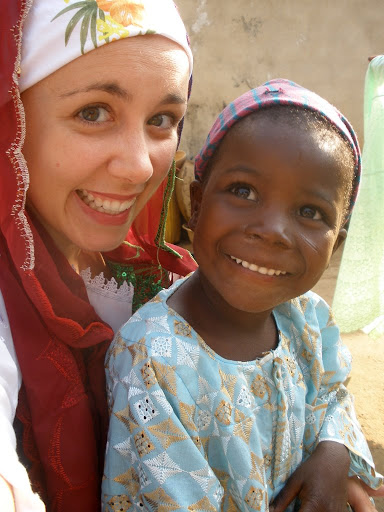
If you are reading this you have likely heard the news of the tragic death of Benin Peace Corps Volunteer Kate Puzey on Wed March 11th.
Kate was an English teacher who had been living and working in the NW town of Badjoude since 2007. She was a very sweet girl, and a passionate and hardworking volunteer. Her passing has affected many.
This week I have been in Cotonou with most other PC staff and volunteers to attend a private memorial held for Kate. It was very lovely. This week the Benin PC Director is bringing Kate's body back to her family in Cumming GA, and a stateside funeral is to be held this Saturday.
Here is a link to Kate's Peace Corps Blog.
Her Uploaded Photos Site.
The AP wire on Kate's Death. And other news sources: the news source and Atlanta Journal.
When such a seemingly meaningless tragedy happens, attempts at explaining its significance or reason, at any level, becomes an impossible and even arrogant task. At least for now, in the immediate wake of such a death, what can those who mourn do, other than praise the Creator for his moving in beautiful people and actions, and then cling harder and tighter to the only hope offered to this broken world:
"Then I saw a new heaven and a new earth, for the first heaven and the first earth had passed away, and the sea was no more. And I saw the holy city, new Jerusalem, coming down out of heaven from God, prepared as a bride adorned for her husband. And I heard a loud voice from the throne saying, “Behold, the dwelling place of God is with man. He will dwell with them, and they will be his people, and God himself will be with them as their God. He will wipe away every tear from their eyes, and death shall be no more, neither shall there be mourning, nor crying, nor pain anymore, for the former things have passed away.” Amen.
Subscribe to:
Posts (Atom)


